
In the countryside surrounding Arzachena, amidst dry-stone walls, vineyards, and expanses of outcropping granite, lies one of the most fascinating and lesser-known archaeological sites in northern Sardinia: the Coddu Ecchju Giants’ Tomb. It is not an imposing monument with the dramatic scenic presence of a standalone nuraghe against the sky, yet anyone who stops in front of its central stele, over four meters high, immediately senses they are in the presence of something ancient and powerful—a place that still speaks, nearly four thousand years later, of rituals, communities, and collective burials.
This article explores what Giants’ Tombs are, why Coddu Ecchju is one of their most significant examples, what can be admired when visiting it, and how to organize a day of discovery into Nuragic archaeology starting from a comfortable base in the Gallura inland.
What are the Giants’ Tombs
The Giants’ Tombs are monumental collective burials typical of the Nuragic civilization, widespread throughout Sardinia but particularly concentrated in Gallura. The name, far from accidental, stems from popular tradition: the large stone slabs used to build them were so massive that inhabitants of later centuries believed only giants could have lifted and arranged them with such precision.
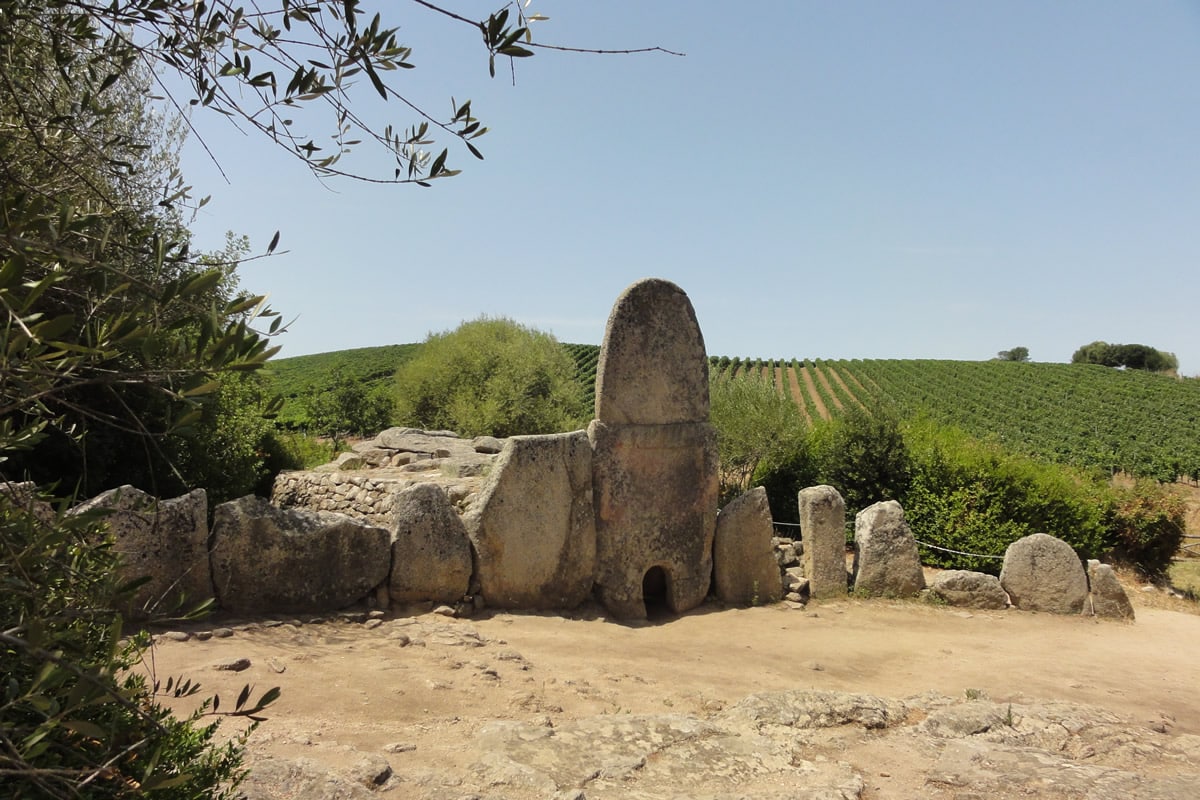
Architecturally, a Giants’ Tomb consists of two main elements: a long apsidal funerary corridor, called the burial chamber, and a semicircular exedras opening in front of the entrance, delimited by slabs driven vertically into the ground and arranged radially like the petals of a stone flower. At the center of the exedra stands the arched stele, a slab worked in the shape of a portal, often decorated with a small opening at the base: a symbolic gateway between the world of the living and that of the dead, through which ritual offerings or the souls of ancestors were believed to pass.
These structures were used for centuries, accommodating generations of deceased members from the same community: not individual tombs, therefore, but true collective monuments tied to the cult of ancestors, a pillar of the social identity of Nuragic populations.
Coddu Ecchju: the most famous tomb in Gallura
Among the dozens of Giants’ Tombs recorded in Sardinia, the one at Coddu Ecchju, in the countryside a few kilometers from the center of Arzachena, is considered one of the best preserved and most representative on the entire island. It dates back approximately to the Middle Bronze Age, between 1800 and 1600 BC, although the structure was reused and expanded in subsequent centuries, a sign of its lasting importance to the communities inhabiting the area.
Its arched stele, about four meters high, is among the largest and best preserved in all of Sardinia: a granite monolith worked with a precision that still surprises scholars today, considering the rudimentary tools available at the time. At the base of the stele opens the characteristic access hole to the burial chamber, which unfortunately today lacks its original large slab covering, but is still perfectly legible in its floor plan.
On either side of the stele unfolds the exedra, formed by knife-like granite slabs defining a semicircular space: here, collective ceremonies linked to the cult of the dead likely took place, moments when the entire community gathered to honor ancestors and renew the group’s identity bonds.
A territory dense with history: the archaeological valley of Arzachena
What makes Coddu Ecchju even more interesting is its context. The territory of Arzachena is in fact one of the densest archaeological areas in Nuragic Sardinia, a true open-air widespread museum that recounts thousands of years of history within just a few square kilometers.
Nearby, one can find:
-
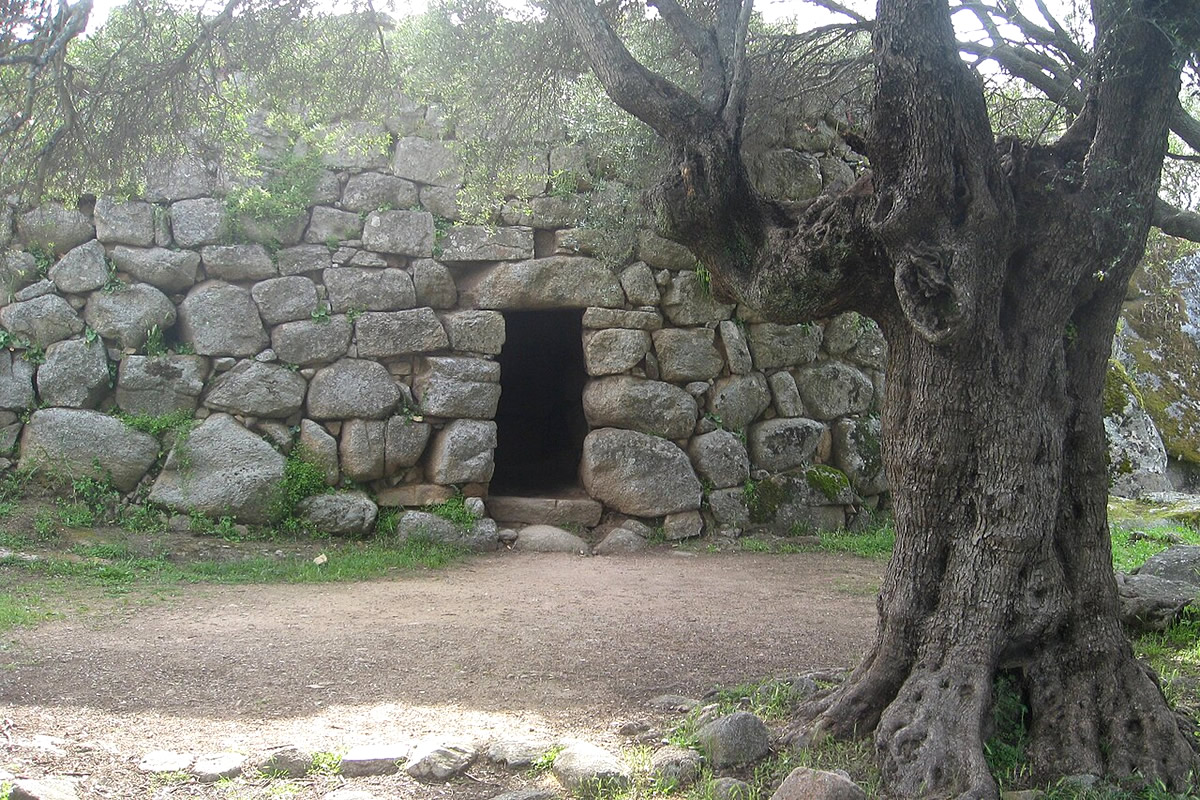
- The Albucciu Nuraghe, an example of a corridor nuraghe built by exploiting a natural granite outcropping, among the oldest and most distinctive in the area.
-
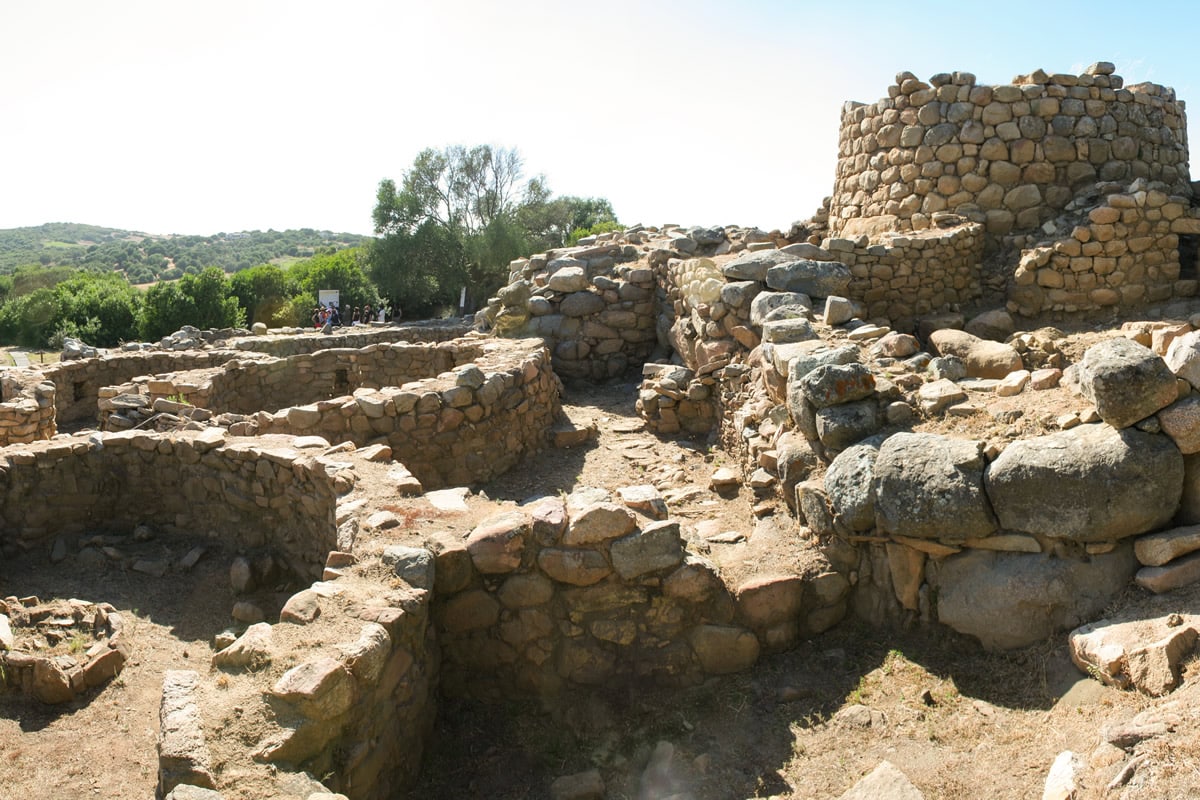
- The La Prisgiona Nuragic Complex, featuring the main nuraghe and a surrounding village composed of circular huts, including the famous “meeting hut” with its stone bench running along the inner perimeter.
-
- The Necropolis of Li Muri, one of the most enigmatic and ancient sites, with its stone circle tombs dating back even to the Neolithic era, preceding the Nuragic civilization itself by centuries.
- The Temple of Malchittu, a building with a unique layout likely linked to ritual functions, immersed in a landscape of rocks and holm oaks.
Exploring these sites in sequence allows visitors to piece together an extraordinary fresco of the evolution of prehistoric and protohistoric Gallurese communities, from the Neolithic to the Bronze Age, in a territory where granite—an omnipresent element in the landscape—has served for millennia as a material for construction, protection, and worship.
 Legends and popular memory
As is often the case with major megalithic monuments, the Giants’ Tombs are also shrouded in an aura of legend handed down orally until recent times. In various parts of Sardinia, it was believed that these structures were inhabited by protective spirits, and that approaching them at night could be dangerous for the uninitiated. Some popular tales recount that sick people would lie beside the central stele in the hope of being healed through ritual contact with the stone, considered a medium between the earthly world and that of the ancestors.
These traditions, although lacking verifiable historical foundation, bear witness to how deeply these places continued to hold a sacred fascination long after the abandonment of the civilization that built them, becoming a part of the collective Gallurese imagination.
Practical tips for your visit
-
- Recommended period: spring and early autumn offer mild temperatures, ideal for exploring the site and its surroundings on foot without the intense summer heat.
-
- Clothing: comfortable shoes are recommended, as the terrain around the tomb is unpaved and partly uneven.
-
- Visit duration: thirty to forty minutes is sufficient for Coddu Ecchju, but for a complete itinerary among the main archaeological sites of Arzachena, dedicating half a day is advisable.
- Combining multiple sites: since the monuments are relatively close to one another, it is possible to organize a short archaeological tour covering Coddu Ecchju, La Prisgiona, and Li Muri on the same day.
Where to stay to explore Gallurese archaeology: the Felix Hotel Country Resort Parco degli Ulivi
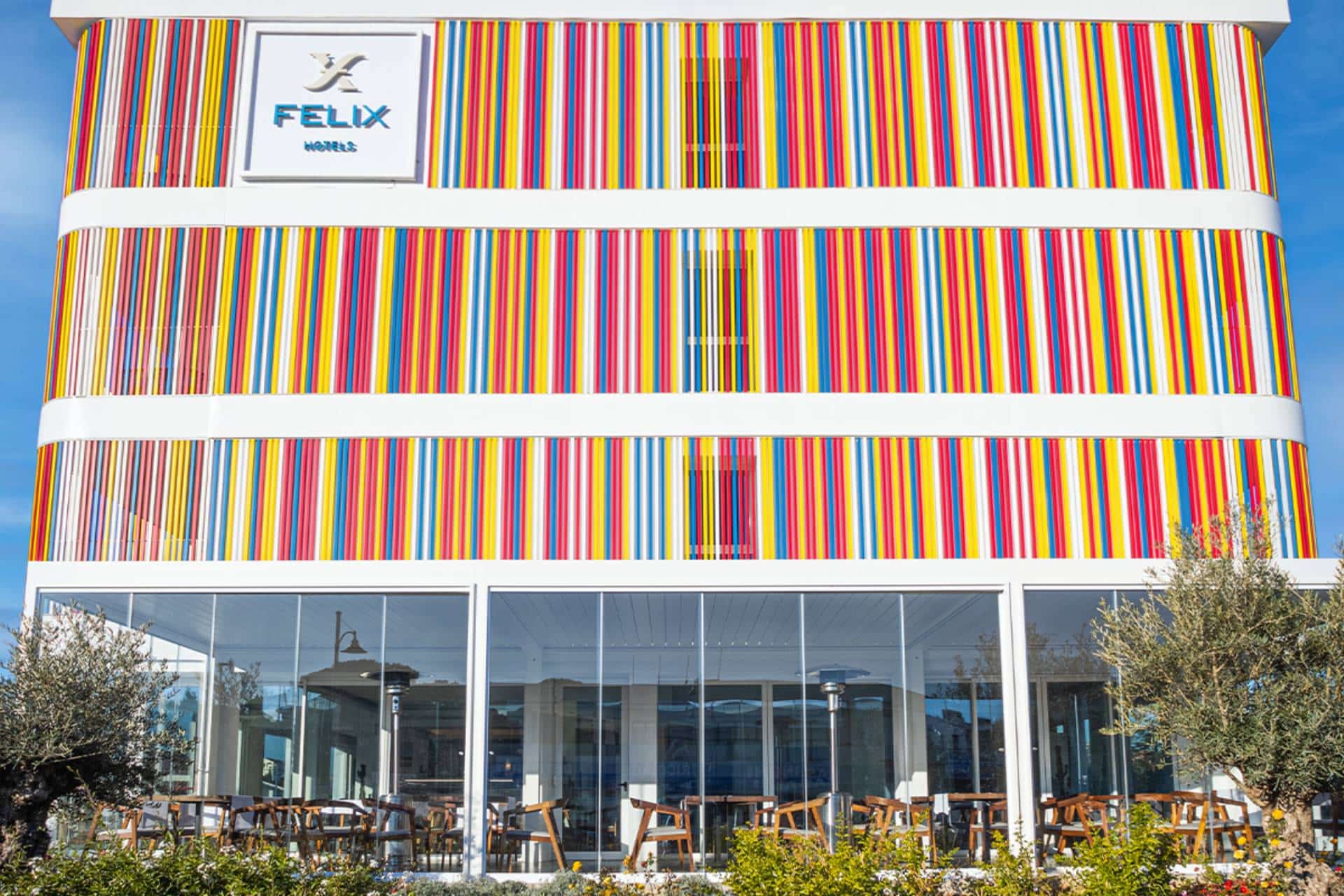
For those wishing to dedicate time to this fascinating itinerary among megaliths and Nuragic history, the Country Resort Parco degli Ulivi represents the ideal starting point. The Country Resort & Restaurant is located just two kilometers from the center of Arzachena, nestled in a landscape of centuries-old olive trees and granite rocks that echoes the ancient atmosphere of the surrounding territory, with the main archaeological sites of the area, including Coddu Ecchju, reachable in just a few minutes by car.
Returning after a day spent among millennial stones to a place where granite also takes center stage in the hotel’s architecture provides an evocative continuity between past and present. The five villas that make up the structure of the Country Resort Parco degli Ulivi were in fact crafted using wood, stone, and granite worked according to local artisanal traditions, in perfect harmony with the landscape that has sheltered the giants’ tombs and Nuragic villages of the area for millennia.
After exploring, guests can treat themselves to a rejuvenating break in the resort’s large panoramic pool, or book a table at the restaurant to discover the Felix Taste philosophy, which reinterprets Mediterranean flavors with gourmet dishes and local raw materials, in a dining room overlooking the pool and mountains that seems to converse directly with the granite landscape traversed during the day.
Those wishing to further explore the bond between territory, nature, and tradition can discover the experiences offered by the resort: from adventures among the rocks of the Contea di Rena Park to Felix Tasting wine cellar tours, all the way to romantic sunset dinners, every offering is designed to let guests experience Gallura not just as a seaside destination, but as a territory to be explored in depth, through nature, taste, and millennial history.
A heritage to preserve and narrate
The Coddu Ecchju Giants’ Tombs are not merely an archaeological site to include in a travel itinerary: they are direct testimony to how Nuragic communities were able to transform the most abundant raw material of the land, granite, into a symbolic language capable of spanning millennia. Visiting them means coming into contact with a fundamental part of Gallurese identity, made of stone, collective memory, and respect for ancestors.
For anyone staying in the Arzachena area, dedicating a day to this megalithic heritage represents a precious opportunity to enrich their vacation with a piece of authentic history, far from the beaten paths, within a landscape that continues to silently recount its millennial story.