
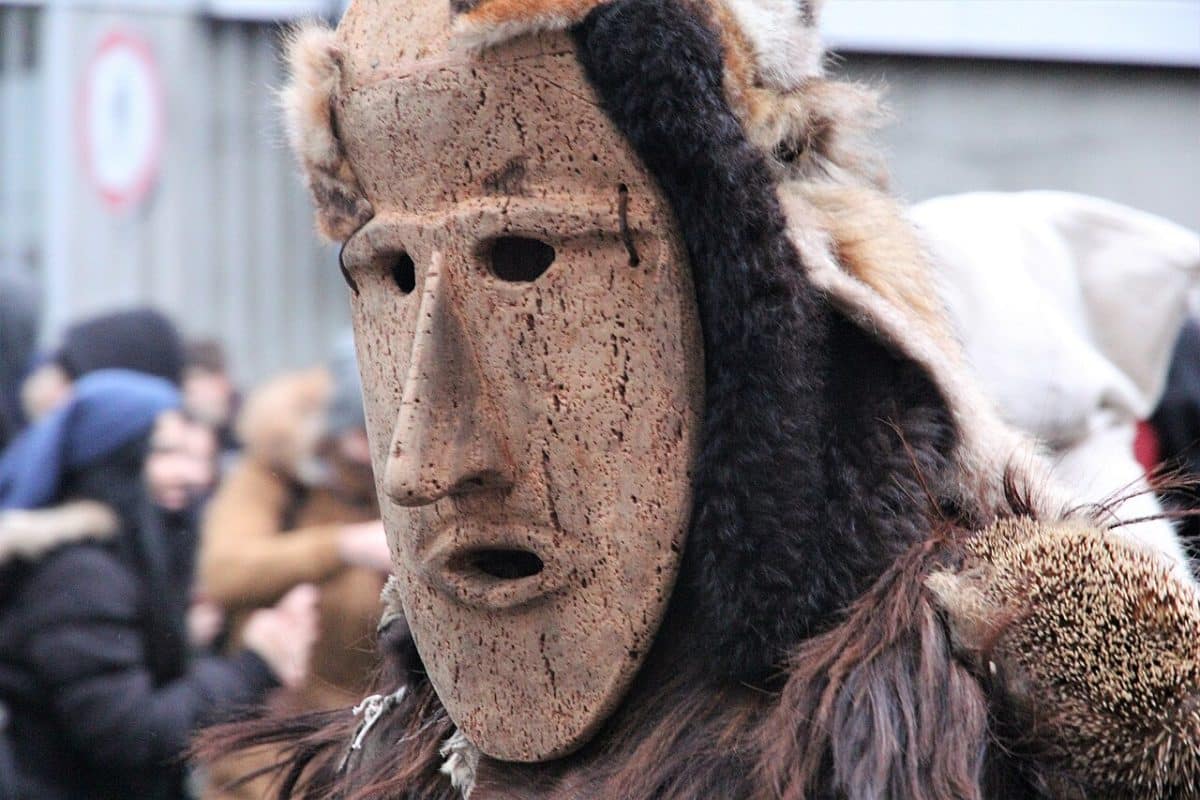
When January in Sardinia is still in the depths of winter, fires are lit in the heart of Barbagia. They are not merely a way to keep warm: they mark the rekindling of the festive season. In Orani, a few kilometers from Nuoro, this moment has a specific protagonist: Su Bundhu (also spelled Su Bundu), the cork mask that opens the Barbagia Carnival amidst flames, shouts, and ritual sowing gestures. It is one of the most symbolic events of the Sardinian winter, and those choosing Nuoro as a base can reach it with a short drive.
Saint Anthony’s Fire and the Start of Carnival
The Orani Carnival begins on January 16, the eve of the Feast of Saint Anthony, with the lighting of bonfires across the town’s various neighborhoods. The following day, January 17, dedicated to Saint Anthony Abbot, Su Bundhu appears for the first time and visits the freshly lit fires, receiving as a gift a traditional sweet blessed during the procession: su pistiddu. According to tradition, this pastry is then distributed to those present and brought to thirteen people named Antonio.
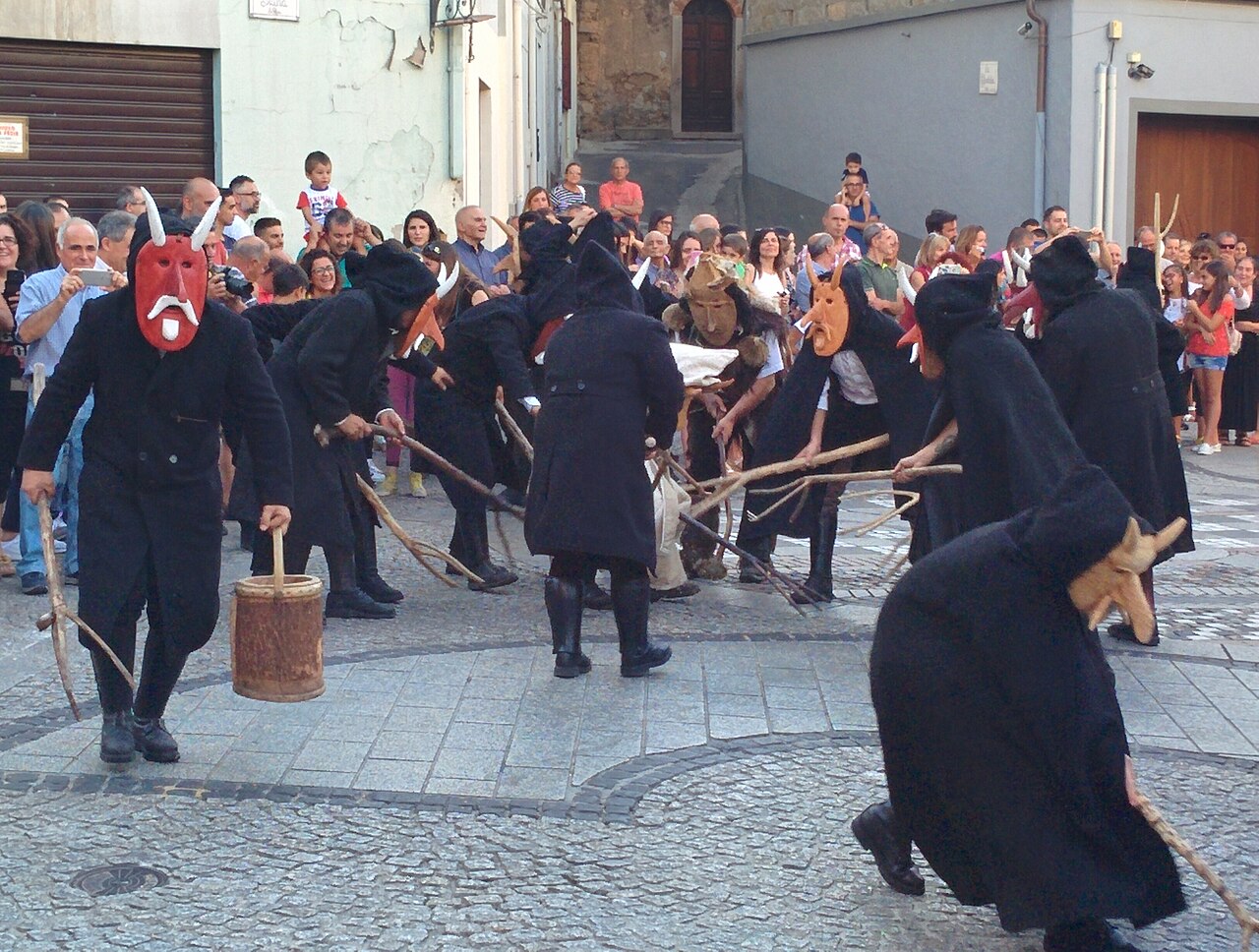
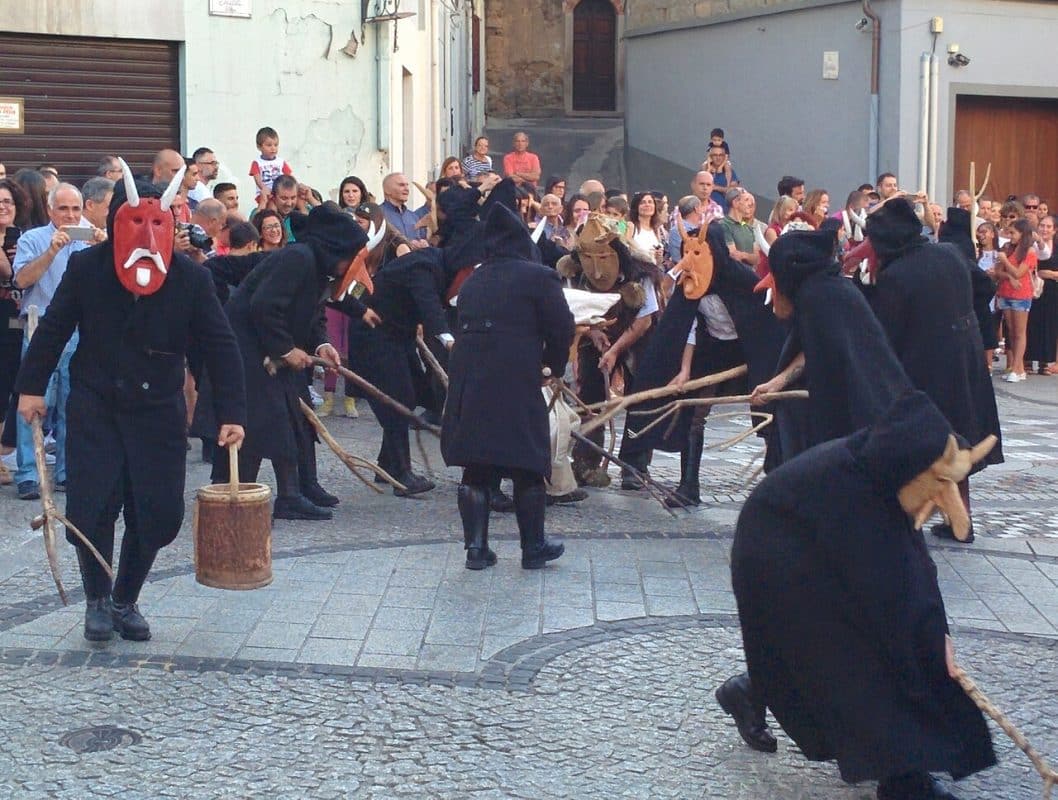
The ritual has remarkable dramatic force. The masked figures surround the fire and stoke it with voices imitating the wind and deep bellowing, whipping up high flames and sparks. The community gathers around the bonfire to eat, drink red wine, and share a ritual centered on the land, animals, and the seasons. Afterwards, the character leaves the scene, returning at the heart of the main Carnival parade, which concludes on Pentolaccia Sunday.
Who is Su Bundhu? A Mask Half Man, Half Ox
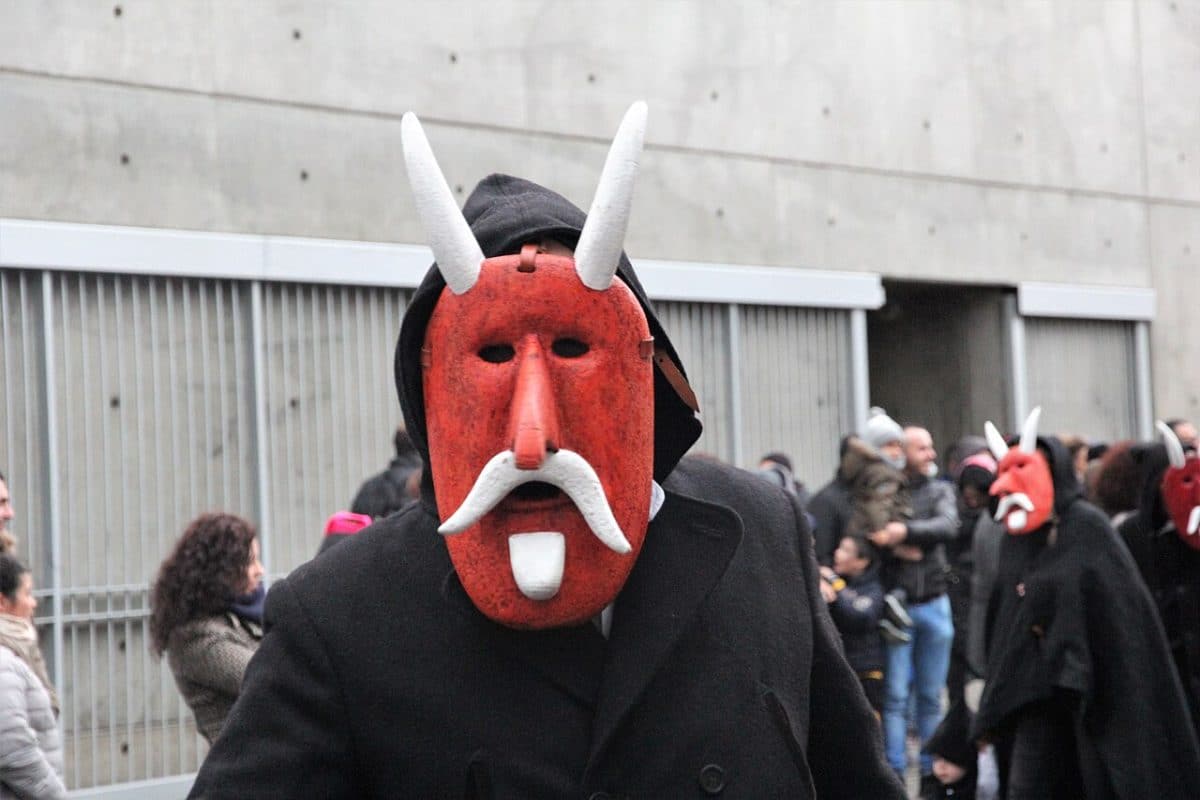
Anyone seeing it for the first time is struck by its presence. Su Bundhu is a creature half-human and half-bovine, wearing a long, loose coat, shirt, velvet trousers, and leather gaiters. Its face is covered by a red-painted cork mask with long horns, a prominent nose, a goatee, and a mustache. It wears su saccu, the traditional Barbagia agro-pastoral cloak made of orbace wool, and holds su trivutzu, a wooden trident carved from a single branch.
The central symbolic gesture is sowing. With ritualistic movements and loud shouts, the Bundos mimic the act of sowing, symbolically tapping the feet of passersby to invite them to dance, and scattering grain into the crowd as a sign of fertility and good fortune.
The History of the Ritual: Fertility, Harvest, and Legend
The roots of Su Bundhu lie in the peasant and pastoral world. The Carnival originated as a propitiatory festival for fertility and harvest abundance, typical of mountain agro-pastoral communities across Europe. The hybrid nature of the mask reinforces this: the ox represents wild, fertile, and instinctual animal power. A study on the mask notes that Su Bundhu embodies three figures of fertilizing agents or seed-bearers, including the wind, which fertilizes the plant world.
A local legend also surrounds the mask. Story has it that on a stormy night, a brave farmer disguised as Su Bundhu persuaded restless spirits to spare the people and their crops. Oral tradition further recounts the discovery of the original mask: it was reportedly found by Professor Marchi, a scholar of Sardinian traditions, in the home of the Semidei family (a noble family of Corsican origin), brought to Nuoro, and is now kept at the Sardinian Ethnographic Museum. Though a local tale, it speaks volumes about how the people of Orani cherish their bond with this iconic figure.
Historical and social context: Orani and the Barbagia Carnival
Su Bundhu is not an isolated case. Alongside the masks of Mamoiada, Ottana, Orotelli, and Lula, it represents the carnival tradition of archaic Sardinia—one deeply tied to the land. In the Barbagia Carnival, masks are not merely costumes: they are ritual figures that enact the bond between human, animal, and the seasonal cycle in a society that sustained itself for centuries through farming and sheep herding. The January fires serve the same social purpose: uniting the town, strengthening neighborly ties, and celebrating hospitality with food and wine.
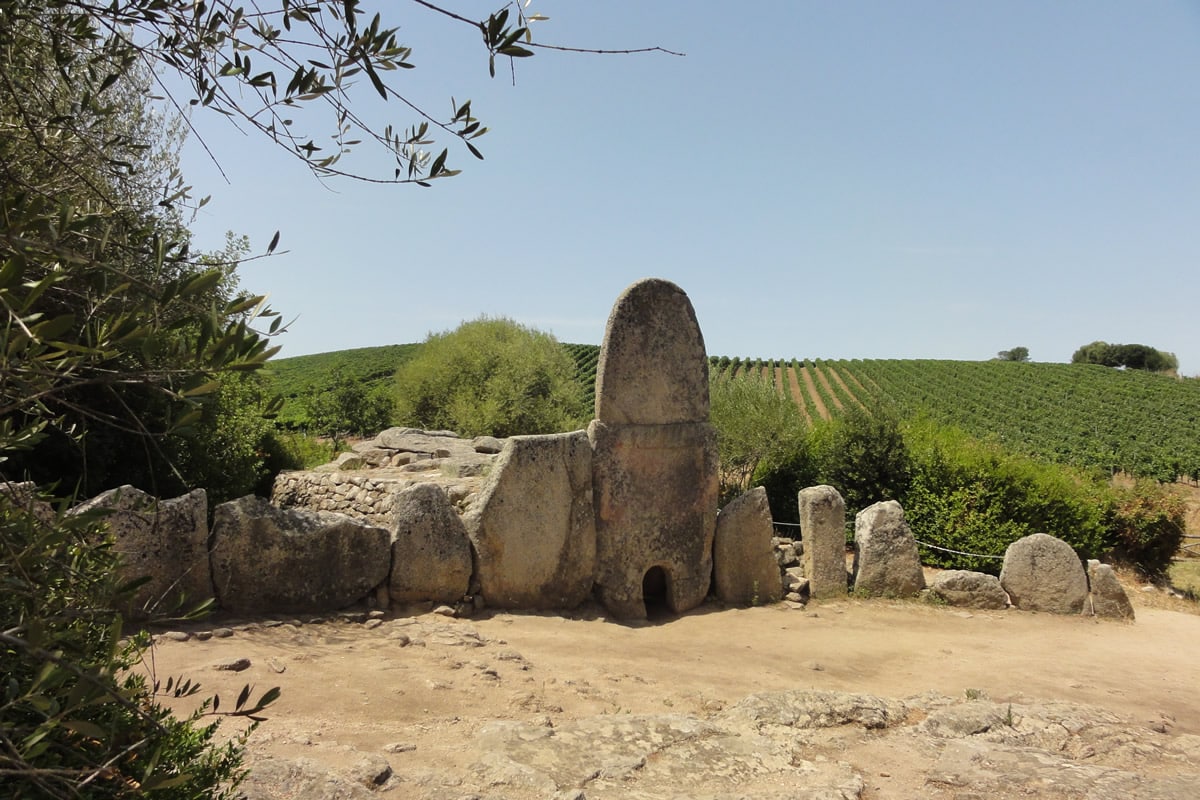
Orani is particularly suited to safeguard this heritage. It is the hometown of Costantino Nivola, Mario Delitala, and the writer Salvatore Niffoi, and it preserves an artisan tradition ranging from cork to velvet, wrought iron to orbace wool. The cork of the mask and the orbace of the cloak are thus the products of a living craft culture. The area’s heritage is equally rich: domus de Janas (fairy houses), dolmens, menhirs, and around thirty Nuragic settlements, with Mount Gonare home to the highest church on the Island.
Today, the mask also serves as an ambassador for Sardinian identity. On February 16, 2026, Su Bundhu took part in the Venice Carnival during the day dedicated to traditional masks, alongside launeddas players from San Vito. In the same year, the town dedicated the Carrasecare de Orane to this iconic figure: organized by the Municipality together with the Pro Loco, the Su Bundhu group, and the Anderas Sardegna association, the event took place on February 21, featuring traditional flavors, music, masks, and a grand parade.
 How to Experience the Ritual: Practical Advice
The ideal time to visit is the evening of January 16 and throughout January 17. In 2027, these dates fall on a Saturday and Sunday, making it a perfect weekend getaway to Barbagia. As the schedule may vary from year to year, it is best to check the Orani Municipality website and the Orani Carnival page on SardegnaCultura before heading out. For a broader overview of events across Sardinia, you can also consult the Sardegna Turismo portal.
If time permits, visit the Nivola Museum, dedicated to the Orani-born sculptor. Meanwhile, Mario Delitala’s collection is housed in the former Friars Minor Observant convent. These two stops round out your day with local art and history.
Where to Stay: Residence Hotel Grandi Magazzini in Nuoro
Orani is just over 20 minutes from the center of Nuoro, making the city an ideal base for experiencing the Barbagia Carnival in total comfort. The Residence Hotel Grandi Magazzini is located on Via Dalmazia right in the city center, occupying the premises of the historic multi-story department store founded in 1962. From here, you can easily walk to the historic center and Corso Garibaldi, or take advantage of the electric bikes provided to guests (deposit required).
The property offers rooms for short stays as well as apartments (studio and one-bedroom flats with kitchen and washing machine), ideal for travelers wanting to explore neighboring towns independently. The residence caters to both brief trips and extended stays, featuring 36 apartments and 4 rooms in total. A special detail that culture lovers will appreciate: the 6×11 Wing dedicates eleven accommodations to as many women who shaped the island’s history, including Grazia Deledda, Maria Lai, and Maria Carta.
After an evening surrounded by fires, traditional masks, and pistiddu, returning to a cozy apartment in the heart of Nuoro is the perfect way to conclude the day. To check rates and special offers, visit the official website of Residence Hotel Grandi Magazzini and book your stay for the Barbagia Carnival.