
Between late October and early November, in numerous villages across Sardinia, children go from house to house asking for gifts “for the souls”. An ancient, living tradition that changes its name from one region to another and shares surprising similarities with Halloween.
Want to see it with your own eyes? Discover where to stay to experience autumn in Sardinia: Residence Hotel Grandi Magazzini in Nuoro or Hotel Felix in Olbia.
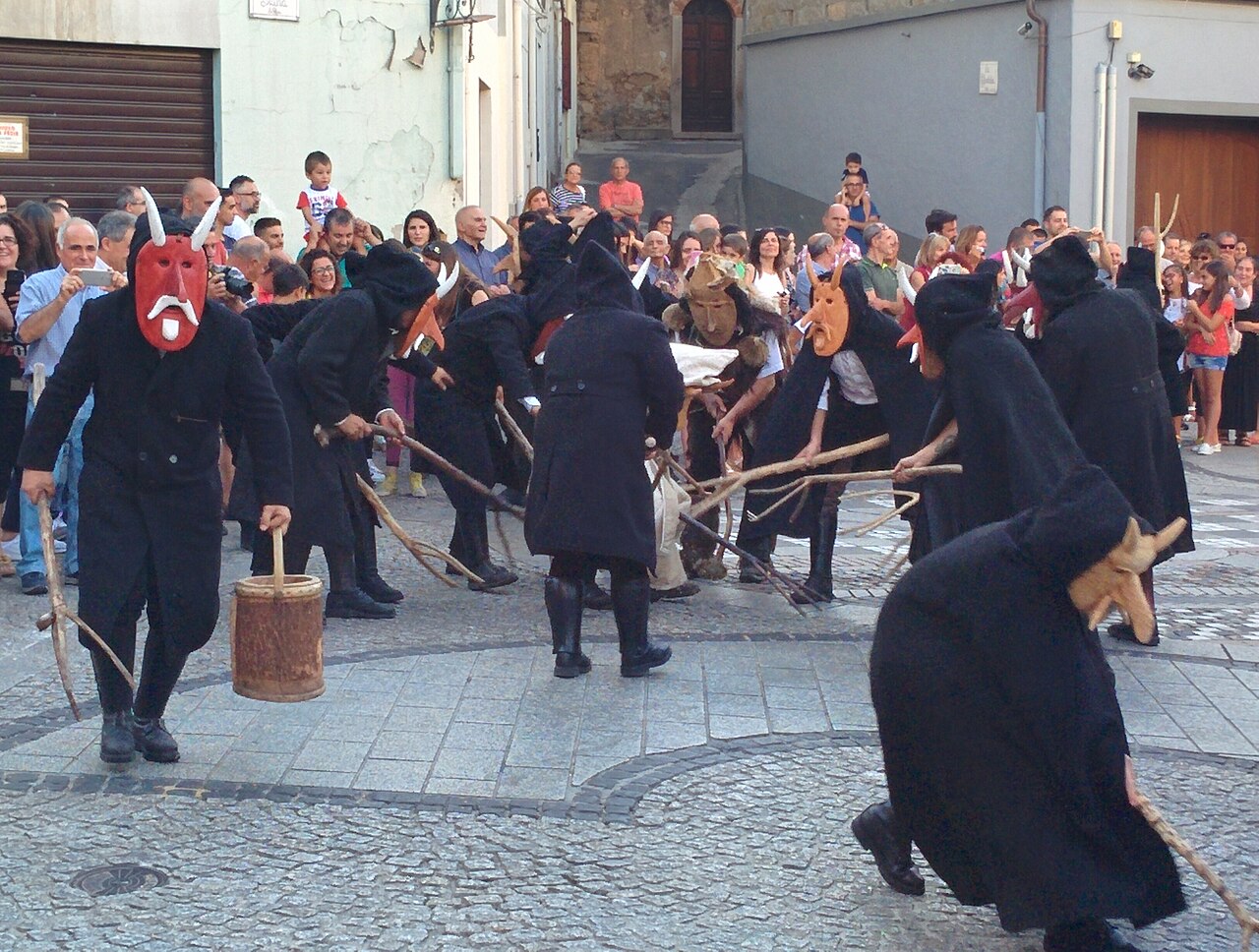
When Halloween arrives, the comparison comes naturally. In Sardinia as well, there are traditions where children knock on doors to receive sweets, dried fruit, and small gifts.
In Nuoro, this custom is known primarily as Su mortu mortu; in other areas of the island, it is called Is Animeddas, Su bene de sas ànimas, Is Panixedda, and by other local names.
In Olbia, the expression “Morti morti” is widespread, and today the tradition shows an interesting blend with Halloween: children continue trick-or-treating from house to house, but it is not uncommon to see them dressed up as witches, ghosts, and other characters from the contemporary holiday. A meeting between local tradition and new expressions that anthropological studies have documented particularly well right in Gallura.
Rather than a single holiday celebrated identically across Sardinia, it is a collection of begging rituals linked to All Saints’ Day and the Commemoration of the All Souls, between November 1st and 2nd.
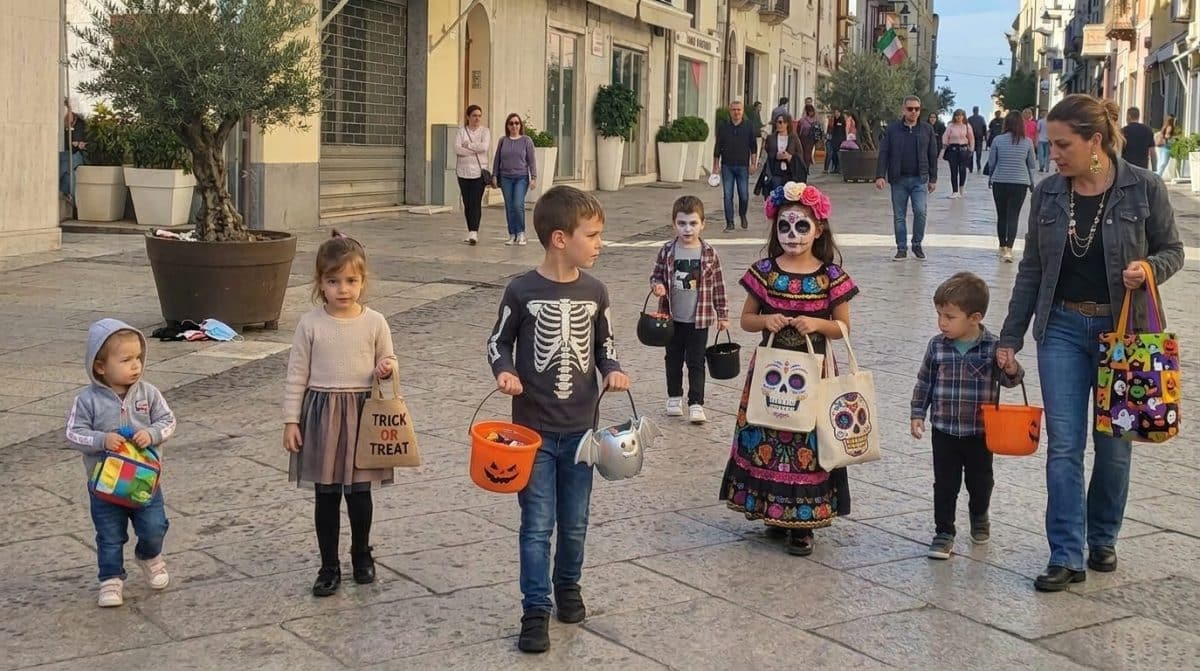 A gift “for the souls”
Anthropologist Sebastiano Mannia, professor of Cultural Anthropology at the University of Palermo and author of the volume Pro sas ànimas. Forme, funzioni e simboli dei riti di questua infantile in Sardegna, studied these traditions in depth.
The meaning of the quest goes beyond a simple gift to children. In traditional culture, what is offered is symbolically intended for the souls of the deceased, sas ànimas. Children thus assume a role of mediation between the world of the living and that of the dead.
In Nuoro, the traditional formula remembered by ISRE – Istituto Superiore Regionale Etnografico is “pro su ’ene ’e sas ànimas”, meaning “for the good of the souls”.
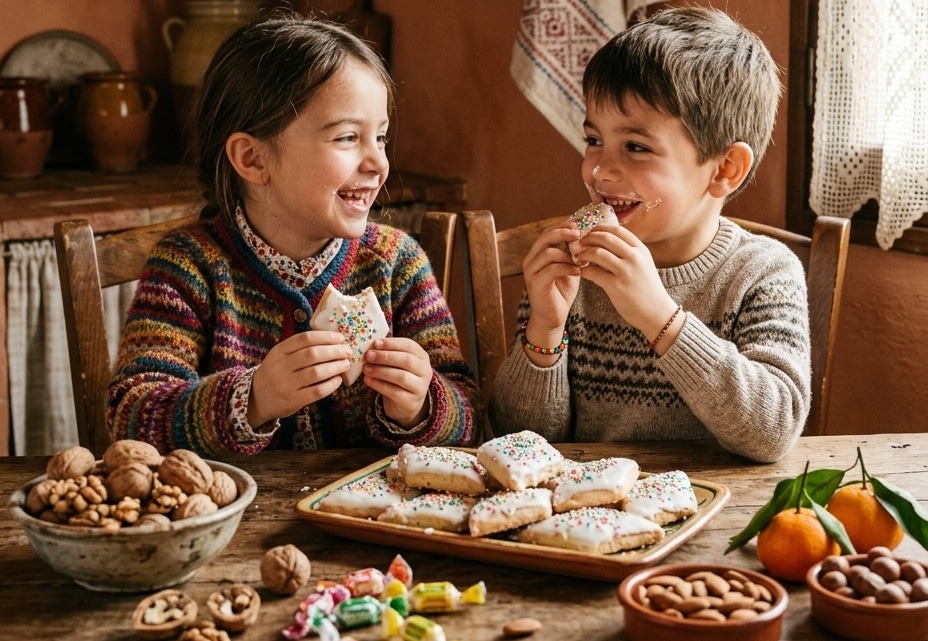
Traditionally, bags were filled mostly with seasonal and homemade items: walnuts, almonds, dried figs, pomegranates, and sweets. Today, candies and chocolates are more common, but some flavors endure.
Among these are papassinos, sweets made with raisins and dried fruit, particularly tied to the All Souls’ period and still stars of Nuoro’s tradition today.
 Is Su mortu mortu the Sardinian Halloween?
Not exactly.
Mannia dedicated the essay Su mortu mortu vs Halloween. Questue infantili in Sardegna specifically to this comparison. The similarities are clear: children go from house to house asking for a gift, and in some traditions, a carved, lit pumpkin even appears.
However, from an anthropological perspective, Halloween and Sardinian trick-or-treating rituals are distinct manifestations that developed in different historical and cultural contexts. The similarities do not prove that one tradition derives directly from the other: rather, they show the presence of shared symbols and ritual practices across many ancient European peasant and pastoral societies.
For this reason, defining Su mortu mortu simply as “the Sardinian Halloween” is evocative, but it risks reducing the richness of a tradition with its own distinct meanings.
A tradition like this is best understood by experiencing it. Book your autumn weekend in Sardinia and choose the right base for you: Nuoro or Olbia.
A Sardinia to discover in autumn too
Traveling to Sardinia between late October and early November means encountering a different island from the summer one: more authentic, slower, and closer to its communities. It is the ideal period to discover historic centers, ethnographic museums, local traditions, and autumn flavors, from sweets to chestnuts and dried fruit.
To truly experience it, Felix Hotels welcomes you at two year-round properties.
In Nuoro: inside the tradition of Su mortu mortu
If you want to experience the ritual up close, the Residence Hotel Grandi Magazzini in Nuoro is the ideal starting point. From here, you can immerse yourself in local culture, visit the Deleddiano Museum, and set out to explore Barbagia and its villages, where the traditions of this period are most deeply rooted.
Discover Residence Hotel Grandi Magazzini and book your stay in Nuoro
In Olbia: the gateway to Sardinia
If you arrive by ferry or plane, Hotel Felix Olbia is the most convenient choice: the port and airport are easily reachable, and from here you can explore Gallura and the heart of the island. After a day spent among villages and traditions, the culinary offerings of Felix Taste await you.
Discover Hotel Felix Olbia and check availability
Book your autumn in Sardinia
Between All Saints’ Day and All Souls’ Day, Sardinia shows one of its most authentic faces: that of its communities, memory, and traditions that continue to engage children and families today.
Don’t just read about it: live it. Choose your base, book online, and set off to discover an unexpected Sardinia.
Sources
- Sebastiano Mannia, Pro sas ànimas. Forme, funzioni e simboli dei riti di questua infantile in Sardegna, Il Maestrale, 2023.
- Sebastiano Mannia, Su mortu mortu vs Halloween. Questue infantili in Sardegna, in La festa delle zucche vuote, FrancoAngeli, 2020.
- ISRE – Istituto Superiore Regionale Etnografico della Sardegna.
Autonomous Region of Sardinia – SardegnaTurismo.
Notes
Sebastiano Mannia, citing research conducted in Olbia, documents a hybridization between the traditional trick-or-treating of “morti-morti” and Halloween. In the Olbia sample analyzed, 55.1% of children celebrated only morti-morti, 12.2% only Halloween, and 32.7% both occasions. The study also highlights cases of children maintaining the traditional request while dressed up as vampires, ghosts, or other Halloween characters. Mannia connects this phenomenon to the multicultural character of Olbia and Gallura. archivioantropologicomediterraneo.it
Recent local news reports also confirm that on November 2nd in Olbia, children still roam the neighborhoods shouting “Morti morti”, often wearing costumes of witches, wizards, superheroes, or Halloween characters. https://www.olbia.it/olbia-i-morti-morti-animano-i-quartieri-della-citta