
Felix Hotels has envisioned three itineraries of three nights each that are not simple tourist routes, but true journeys into Sardinian identity, connecting some of the island’s most authentic and evocative locations. Each stop is designed to allow full immersion in the territory, dedicating the right amount of time to millennia-old villages, extraordinary archaeological sites, and breathtaking panoramas, with the comfort of accommodations that know how to interpret Sardinian hospitality in its deepest sense.
Sardinia is not told, it is crossed. As Grazia Deledda wrote, “Sardinia is outside time and history,” an island that preserves in its landscapes millennia of Nuragic civilization, unchanged pastoral traditions, and a nature that generously alternates vertiginous cliffs, pristine beaches, and silent plateaus. Crossing this island means understanding its layered soul, moving from the turquoise of the coast to the granites of Barbagia, from the scents of the Mediterranean scrub to the genuine flavors of the inland areas.
Itinerary 1: Felix Coast-to-Coast – A crossing to discover Sardinia’s inner sea, Barbagia.
Duration: 3 nights | From Santa Caterina di Pittinuri to Bari Sardo
This itinerary crosses Sardinia from west to east, a true coast-to-coast journey linking Montiferru to the eastern shores, passing through the beating heart of Barbagia. It is a journey that Salvatore Satta would likely have appreciated, he who wrote of the “motionless time” of his Nuoro, a city suspended between tradition and modernity.
Day 1: Santa Caterina di Pittinuri and the Arch of S’Archittu
Morning: Discovering the natural arch
The journey begins at the Felix Hotel La Baja, set in the quiet of Santa Caterina di Pittinuri, a seaside hamlet of Cuglieri. This property perfectly embodies the philosophy of Sardinian hospitality: spacious sea-facing rooms and a relaxed, family atmosphere that invites rest. Its privileged location allows guests to reach the small coves of the area on foot and to enjoy sunsets that paint the limestone cliffs red and gold. Guests can enjoy the swimming pools surrounded by Mediterranean vegetation, perfect for cooling off after a day of exploration, while the restaurant celebrates local products with dishes from the Cuglieri tradition, from culurgiones to desserts made with honey and almonds.
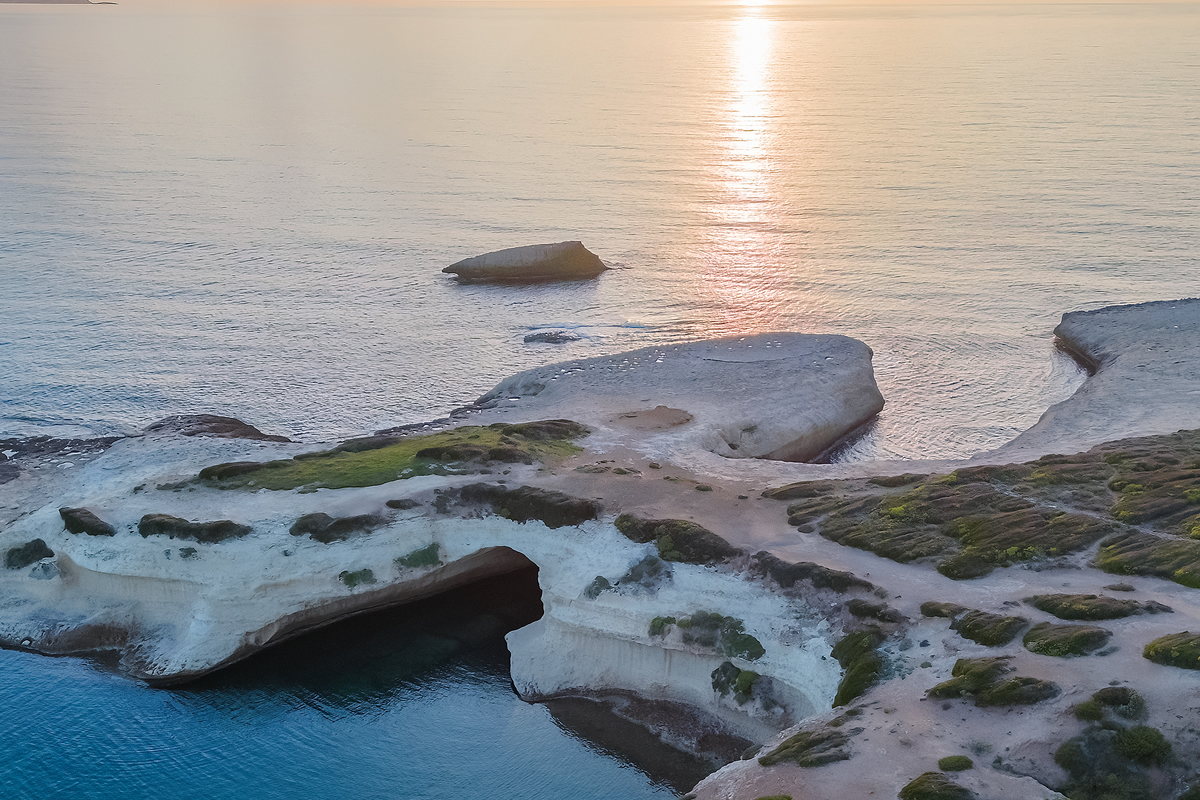
From the hotel, just ten minutes by car along the SP 59 are enough to reach S’Archittu, one of the most photographed natural phenomena in western Sardinia. This limestone rock arch, sculpted by millennia of mistral winds and the sea, rises like a natural cathedral above crystal-clear waters. A walk along the cliffside paths offers extraordinary viewpoints: the contrast between the white rock and the deep blue sea creates a spectacle that changes with the light of day. On mistral days, waves crash beneath the arch, creating spectacular water displays.
Afternoon: Cuglieri and Montiferru
In the early afternoon, the route climbs inland along the SP 19 which, with its hairpin bends, leads to Cuglieri, one of the most fascinating villages in the province of Oristano. Perched on the slopes of Montiferru at nearly 500 meters above sea level, Cuglieri overlooks the coast with views stretching from the cliffs of Santa Caterina to the Gulf of Oristano. The village has preserved its medieval layout intact, with narrow alleys climbing up to the Basilica of Santa Maria della Neve, whose majolica bell tower is visible from miles away.
Walking through Cuglieri means discovering trachyte portals, stately homes with shaded courtyards, and small corners where time seems to have stood still. Not far from the center, a stop at the Church of San Pietro delle Immagini is well worth it— a 12th-century Romanesque building that preserves frescoes of rare beauty.
Before returning to Santa Caterina, it is worth venturing briefly into Montiferru, the ancient extinct volcano that shaped this part of Sardinia. The holm oak and downy oak forests covering the slopes offer trails for relaxing walks, and the inland villages—such as Seneghe, famous for its olive oil—preserve artisanal traditions that are still very much alive.
Returning to the Hotel La Baja in the late afternoon allows time to enjoy the beach and a sunset from the hotel terrace.
Day 2: Toward the heart of Barbagia
Morning: Macomer and the plateau
After breakfast, the coast is left behind to begin the journey inland. The SS 131 (Carlo Felice) quickly leads toward Macomer, covering about 55 kilometers through landscapes that gradually change: the Campidano plain gives way to gentle hills dotted with sheepfolds and cork oak groves. Macomer is a transit town but also an important historical hub: its territory preserves top-level Nuragic remains, such as the Nuraghe Santa Barbara, a monumental complex rising on a hill and dominating the valley below.
Visiting the nuraghe takes about an hour and offers the opportunity to understand the complexity of Nuragic civilization: the central tower, surrounded by bastions and ancillary structures, bears witness to a sophisticated social organization. From the site, the view extends as far as the mountains of Marghine and Barbagia.
Afternoon: Nuoro and the island’s cultural wealth
Continuing east along the SS 131 DCN (the Carlo Felice expressway), after about 35 kilometers one reaches Nuoro, a city that Salvatore Satta described as suspended between the “archaic world” of Barbagia and modern aspirations. Nuoro is the cultural heart of the island, birthplace of Grazia Deledda—winner of the Nobel Prize in Literature in 1926—and of artists, writers, and intellectuals who have given voice to Sardinian identity.
The visit to the city begins at the MAN Ethnographic Museum (Museum of Man), considered among the most important of its kind in Europe. Its collections document traditional Sardinian life through costumes, jewelry, masks, work tools, and reconstructions of domestic environments. Particularly evocative is the section dedicated to the traditional costumes of the various Sardinian villages, each with its own chromatic and symbolic features.
Just a short walk from the MAN is the Deleddian Museum, housed in the writer’s birthplace. The rooms preserve original furnishings, manuscripts, and personal objects of Grazia Deledda, allowing visitors to immerse themselves in the atmosphere of 19th-century Nuoro that forms the backdrop of many of her novels. As Deledda herself wrote: “The landscape of my land has entered into me; I will never forget it.”
In the late afternoon, a walk on Mount Ortobene (about a 10-minute drive from the center) offers one of the most comprehensive views over Barbagia: the panorama stretches from the mountains of Supramonte to the plain of Nuoro, with the Gennargentu massif closing the horizon to the southeast. At the summit stands the 7-meter-tall statue of the Redeemer, the destination of a traditional pilgrimage held every year on the last Sunday of August.
Evening: Stay at the Residence Grandi Magazzini Nuoro
The day ends at the Residence Grandi Magazzini Nuoro, a property created from the renovation of the former department store building, right in the heart of the city. The residence represents a successful example of urban regeneration: spacious common areas, characterized by contemporary design that dialogues with original architectural elements, create a welcoming and refined atmosphere. The rooms are large and bright, furnished with a modern taste attentive to traditional Sardinian materials, some featuring a kitchenette for those seeking greater independence. The central location of the Residence allows guests to explore Corso Garibaldi on foot, with its shops, historic cafés, and restaurants where one can taste the dishes of the Barbagia tradition: from porceddu to culurgiones, from pecorino cheeses to desserts such as seadas. The property is ideal for those who wish to experience Nuoro like a local, with the freedom to explore the city and the comfort of returning to a quiet, comfortable environment.
Day 3: From Nuoro to the eastern coast
Morning: Orgosolo and the murals of memory
The third day begins with one of the most evocative stops of the itinerary: Orgosolo, reachable from Nuoro in about 20 kilometers along the SS 389. The road climbs through the mountains of Barbagia, crossing landscapes of harsh and wild beauty, where pastures alternate with patches of holm oaks and cork oak forests. Orgosolo is known worldwide for its murals, over 150 works covering the facades of houses in the historic center, transforming the village into an open-air museum.
The murals of Orgosolo are not simple decorations: they are voices of social protest, testimonies of peasant struggles, reflections on peace and war, and celebrations of Sardinian culture. Born in the 1970s through the initiative of a group of anarchist teachers from Milan and later continued by local artists and the Sienese Francesco Del Casino, the murals recount the history of the 20th century through the eyes of a community that has always asserted its autonomy and identity. Walking through the streets of Orgosolo, among shepherds leading their flocks and elderly people sitting in front of their homes, means immersing oneself in a dimension where ancestral Sardinia is still tangible.
The village also preserves an exceptional culinary tradition: local restaurants offer simple yet extraordinarily intense dishes, such as roast suckling pig cooked according to the ancient “a carraxiu” technique (buried under embers) and pecorino cheeses aged in the caves of Supramonte.
Afternoon: Lanusei and the descent toward Bari Sardo
Leaving Orgosolo, the journey continues east along the SS 389, crossing the Supramonte, one of the wildest and most fascinating territories in Sardinia. The road passes through the Gola di Gorropu, one of the deepest canyons in Europe (although visiting it on foot would require several hours), and offers continuous panoramic views of limestone walls and holm oak forests.
After about 60 kilometers of curves and hairpin bends—a route that comfortably takes about an hour and a half—one reaches Lanusei, the capital of Ogliastra. This town, perched at 600 meters above sea level, enjoys an exceptional panoramic position: on one side the view stretches over the mountains of Gennargentu, on the other it opens toward the Tyrrhenian Sea. A stop in Lanusei allows visitors to explore the historic center with the Cathedral of Santa Maria Maddalena and to enjoy the view from the Belvedere, a natural terrace overlooking the coast.
From Lanusei, the SS 198 descends toward the sea along a spectacular route: in just a few kilometers one passes from 600 meters of elevation to sea level, crossing several microclimates. The hairpin bends offer breathtaking views over the Gulf of Arbatax and the coastal plains of Ogliastra.
Evening: Arrival in Bari Sardo and the Galanias Hotel & Retreat
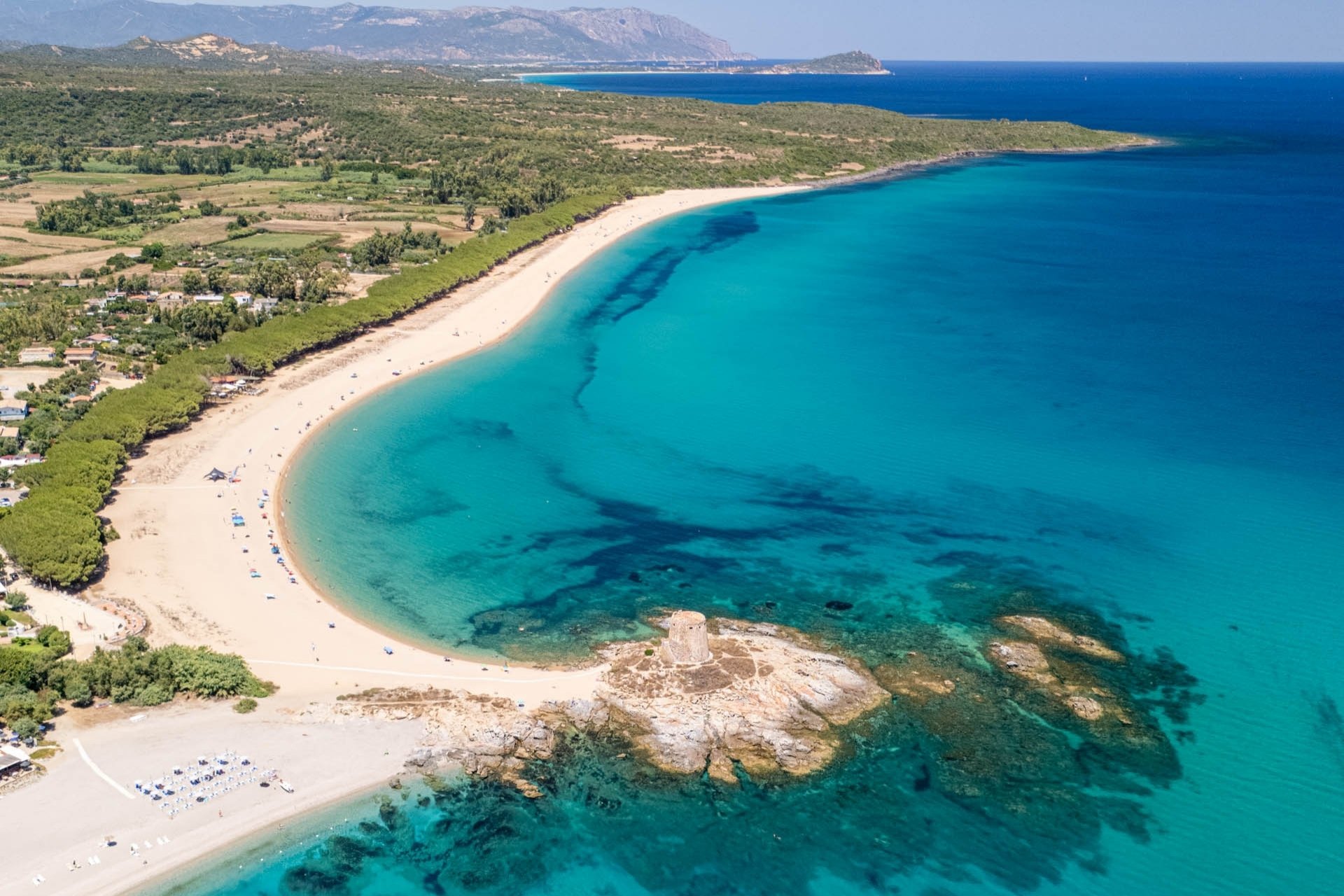
After a descent of about 15 kilometers, you reach Bari Sardo, a charming coastal town in Ogliastra. Here, the coast-to-coast journey concludes with a stay at the Galanias Hotel & Retreat, a modern structure nestled in a private Mediterranean park. This hotel stands out as a true sanctuary dedicated to holistic well-being: its highlight is the yoga and wellness activities, featuring daily sessions of yoga, meditation, and mindfulness practices led by qualified instructors in lush green settings or on the sea-view terrace. The hotel also offers large swimming pools – a 25-meter main pool and one dedicated to children – surrounded by sun loungers and gazebos that invite relaxation. The rooms, all featuring a balcony or terrace, are furnished with natural materials and colors reflecting the tones of the earth and sea. The restaurant celebrates Ogliastra cuisine with its land and sea dishes, from culurgiones filled with potato and mint to fresh fish plates, aged cheeses, and desserts made with honey and fresh cheese. The Torre di Barì beach, with its golden sand and transparent waters, is just a few minutes’ walk from the hotel.
Itinerary 2: Felix Northern Gems – Amidst Granite and Turquoise Waters
Duration: 3 nights | From Porto San Paolo to Santa Caterina di Pittinuri
This second itinerary explores north-eastern Gallura and then crosses the island toward the western coast—a route that alternates between the crystalline waters of the Tavolara Marine Protected Area, the granite cliffs of Santa Teresa, and the volcanic landscapes of Montiferru. Michela Murgia, a writer who masterfully depicted contemporary Sardinia without forgetting its roots, would likely have appreciated this journey connecting places of extraordinary natural beauty with villages where traditions remain vibrant.
Day 1: Porto San Paolo and the Tavolara Marine Protected Area
Morning: The Island of Tavolara
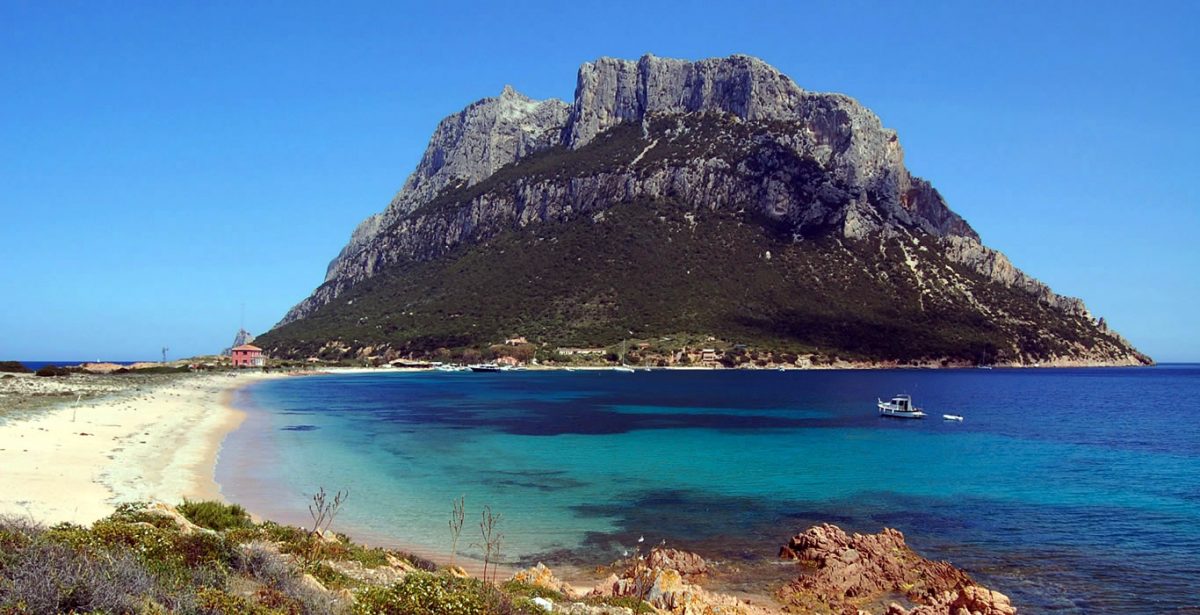
The journey begins at the Hotel Residence Porto San Paolo, a splendid property overlooking the bay toward Tavolara Island, one of Gallura’s most iconic symbols. The hotel, with architecture reflecting the tones of granite and Mediterranean scrub, offers rooms with sea views, some with private terraces to admire Tavolara’s unmistakable profile, as well as residence solutions with kitchenettes for those seeking more independence. The property features direct beach access and a swimming pool with a solarium overlooking the sea, ideal for those wishing to alternate the beach with the tranquility of the resort.
Tavolara is a limestone massif rising 565 meters from turquoise waters, creating a profile that looks like a pyramid reclining on the sea. Described by Jacques Cousteau as one of the most beautiful marine areas in the Mediterranean, the island is surrounded by a protected marine area boasting exceptionally rich seabed. Numerous local operators organize boat excursions to circumnavigate the island, snorkel in hidden coves, and, with a bit of luck, spot dolphins and sea turtles.
On the island, accessible via ferries departing from Porto San Paolo, there is a small fishing village with a few houses and restaurants serving very fresh fish. The Spalmatore di Tavolara beach, with its white sand and Caribbean-hued waters, is one of Sardinia’s most paradisiacal spots.
Afternoon: San Teodoro and Its Beaches
In the afternoon, traveling about 15 kilometers south along the SS 125, you reach San Teodoro, a seaside resort that has maintained a balance between tourism development and environmental protection. The beaches of San Teodoro are justly famous: La Cinta, a stretch of white sand over 3 kilometers long separated from the town by the lagoon of the same name (an important wetland for birdlife), and Cala Brandinchi, nicknamed “Little Tahiti” for its transparent waters and fine sand.
The San Teodoro lagoon is worth a visit: wooden walkways allow you to venture among the reeds where pink flamingos, herons, and cormorants nest. The contrast between the intense blue of the sea and the pink of the flamingos creates scenes of rare beauty, particularly suggestive at sunset.
The town itself, with its promenade and narrow central streets, offers local craft shops, ice cream parlors, and restaurants to taste typical Gallurese dishes: from Gallurese soup (a type of lasagna made with bread, broth, and cheese) to desserts like papassinas.
Evening: Return to Porto San Paolo
Returning to the Hotel Residence Porto San Paolo allows for dinner at one of the area’s typical restaurants, followed by a relaxing evening. The hotel’s location is perfect for an evening walk on the beach under an exceptionally clear starry sky.
Day 2: Toward Santa Teresa di Gallura
Morning: Olbia and the Archaeological Museum
Leaving Porto San Paolo, the SS 125 leads you 20 kilometers to Olbia, the gateway to Gallura for those arriving by sea or air. Despite being a modern and lively city, Olbia preserves an important historical heritage: the Archaeological Museum houses artifacts documenting the Phoenician, Punic, and Roman presence in the area. Particularly interesting is the exhibition dedicated to Roman ships found during construction of the marina, testifying to the commercial importance of ancient Olbìa.
The historic center, with Corso Umberto I, the Basilica of San Simplicio (a masterpiece of Sardinian Romanesque architecture), and the small ethnographic museum, is worth a two-hour stroll before continuing north.
Afternoon: Palau and the Maddalena Archipelago
From Olbia, the SS 125 continues north through granite landscapes of extraordinary beauty. After about 40 kilometers, you reach Palau, a town overlooking the Strait of Bonifacio and the gateway to the Maddalena Archipelago. Before entering the town, the Bear Rock (Roccia dell’Orso) is worth a stop—a massive granite boulder shaped by the wind to resemble a bear, offering a spectacular view of the archipelago and Corsica.
Palau is a lively center with a bustling promenade and numerous operators organizing excursions to the Maddalena Archipelago. Even those without time to visit the islands can appreciate the view over the strait separating Sardinia from the archipelago’s main island, with waters fading from emerald green to cobalt blue.
From Palau, the SP 90 leads about 25 kilometers to Santa Teresa di Gallura, crossing a landscape where pink granite reigns supreme. Wind-eroded boulders take on fantastic shapes, creating an almost lunar landscape dotted with Mediterranean scrub.
Evening: Arrival at Felix Hotel La Coluccia
Santa Teresa di Gallura is the northernmost settlement in Sardinia, facing the Strait of Bonifacio just a few kilometers from Corsica. The Felix Hotel La Coluccia is in a privileged position, directly on the coast, surrounded by granite rocks that gently slope toward the sea. The structure, immersed in a park of Mediterranean plants, offers rooms overlooking the sea with private terraces to enjoy unforgettable sunsets, with Corsica visible on the horizon. The hotel’s beach, accessible via a path through the rocks, is a sheltered cove with crystalline waters ideal for snorkeling—a true corner of paradise where pink granite meets the turquoise sea. The restaurant serves traditional Gallurese dishes and seafood specialties, while the panoramic terrace bar is the perfect spot for a sunset aperitif. The swimming pool, nestled among the granite rocks, creates a unique atmosphere of perfect integration between architecture and nature.
Day 3: From Santa Teresa to the West Coast
Morning: Capo Testa and Its Beaches
The third day begins with a visit to Capo Testa, one of Sardinia’s most spectacular locations, just a few minutes’ drive from Santa Teresa. This granite promontory, connected to the mainland by a thin sandy isthmus, offers a concentration of natural beauty: on one side, Rena di Ponente beach with its fine white sand; on the other, Rena di Levante, more sheltered and intimate. The two beaches are separated by the sandy isthmus, creating a unique setting where you can move in just a few steps from the side hit by the mistral wind to the calmer side.
Capo Testa is also a paradise for trekking enthusiasts: paths among the granite boulders lead to the Valle della Luna (Valley of the Moon), a natural amphitheater of wind-sculpted rocks where hippies used to gather in the 1970s, and to the Lighthouse, from which the view extends to Corsica and the straits. Abandoned granite quarries, where the Romans extracted material for their monuments, add archaeological charm to the landscape.
Afternoon: Crossing the Island Toward Bosa
After lunch, the most challenging but also most fascinating part of the itinerary begins: crossing Sardinia from the north to the south-west. Take the SS 133 south toward Tempio Pausania, and then, via the SS 672 and SS 131, head toward the west coast. The route, about 150 kilometers long, crosses very diverse landscapes: from the granites of Gallura to the forests of Limbara, from the plains of Logudoro to the hills of Anglona.
A recommended stop is Bosa, one of Sardinia’s most picturesque villages, reachable by detouring onto the SS 129 bis. Bosa stretches along the Temo River (Sardinia’s only navigable river) with pastel-colored houses climbing up to Malaspina Castle, a medieval fortress dominating the valley. The medieval quarter of Sa Costa, with its narrow alleys and stairways, preserves its ancient charm intact. The tanneries along the river, now largely abandoned, testify to the historical importance of leatherworking for the local economy.
Bosa is also famous for Malvasia, a sweet wine made from dried grapes grown on the steep terraces surrounding the town. A stop at one of the historic wineries allows you to taste this nectar accompanied by traditional sweets.
Evening: Arrival in Santa Caterina di Pittinuri
From Bosa, the SP 49 leads to Santa Caterina di Pittinuri in about 30 kilometres, following one of the most scenic coastal roads in Sardinia. The road winds between sheer cliffs plunging into the sea and small coves, offering unforgettable views, especially at sunset.
The Felix Hotel La Baja welcomes guests with its relaxed and family-style atmosphere. The rooms, furnished with elegant simplicity and natural materials, offer views over the sea and sunsets that here take on fiery hues. After the kilometres travelled, the hotel’s swimming pools, surrounded by Mediterranean vegetation, are the ideal place to recharge. Dinner at the hotel restaurant is an opportunity to discover the flavours of the Montiferru area: from herb-seasoned lamb to pecorino cheeses, from porcini mushrooms (in season) to desserts made with strawberry tree honey.
 Itinerary 3: Felix Granite & Sea – From Gallura to Ogliastra
Duration: 3 nights | From Santa Teresa di Gallura to Bari Sardo
The final itinerary offers a journey that crosses Sardinia from north to south-east, linking the granite landscapes of Gallura to the eastern coast, passing through the inland areas of Baronia and Ogliastra. It is a journey that Emilio Lussu, Sardinian intellectual and politician and author of Un anno sull’Altipiano, would likely have appreciated for its ability to reveal the island’s many different souls.
Day 1: Santa Teresa and the Gallura hinterland
Morning: Santa Teresa and its beaches
The journey begins once again at the Felix Hotel La Coluccia in Santa Teresa di Gallura. The morning is dedicated to exploring the beaches around Santa Teresa, among the most beautiful in northern Sardinia. Rena Bianca, the town’s main beach, lies just a few minutes’ walk from the centre: a sweeping arc of dazzling white sand lapped by crystal-clear waters, with views towards Corsica. Its shallow seabed makes it ideal for families.
Continuing eastwards along the coast, more secluded coves can be reached, such as Conca Verde and Santa Reparata, the latter characterised by its amphitheatre-like shape and waters that fade from turquoise to deep blue. Paths winding through the rocks lead to small, secluded inlets where nature reigns supreme.
Afternoon: Porto Pozzo and the Gallura hinterland
Following the SP 90 south-east for about 15 kilometres, you reach Porto Pozzo, a charming seaside village overlooking a sheltered bay. The village has retained an authentic atmosphere, with fishing boats moored in the small harbour and restaurants serving the catch of the day.
From Porto Pozzo, a detour inland along secondary roads leads to the Valley of the Moon near Aggius (not to be confused with the one at Capo Testa), a landscape of granite boulders sculpted by the wind into anthropomorphic and zoomorphic shapes. Aggius itself, one of the most distinctive villages in Gallura, is well worth a visit for its Ethnographic Museum and its stone-paved streets lined with perfectly preserved granite houses.
Returning to Santa Teresa in the late afternoon allows guests to once again enjoy the hospitality of the Felix Hotel La Coluccia, with a dinner celebrating the flavours of the Gallura sea and a relaxing evening on the terrace or with a stroll along the hotel’s private beach.
Day 2: From the modern glamour of the Costa Smeralda to the millenary history of Nuragic civilisation
Morning: The Costa Smeralda
Leaving Santa Teresa, the SP 90 and then the SP 59 lead towards the famous Costa Smeralda, covering around 50 kilometres through granite landscapes of extraordinary beauty. The Costa Smeralda was shaped in the 1960s by the vision of Prince Karim Aga Khan IV, who transformed it into a destination for elite tourism while enforcing strict architectural and environmental guidelines.
Porto Cervo, the glamorous heart of the Costa Smeralda, is worth a stop: the marina with its luxury yachts, the central piazzetta lined with designer boutiques, and the Stella Maris Church overlooking the sea. Beyond the glamour, the Costa Smeralda boasts beaches of exceptional beauty: Liscia Ruja (also known as Long Beach), a stretch of white sand over a kilometre long bathed by turquoise waters; Capriccioli, made up of three small coves separated by granite headlands; and Romazzino, with its fine sand and the pink rocks framing it.
Afternoon: Arzachena and the archaeological sites
From Porto Cervo, Arzachena can be reached in about 20 minutes. This inland Gallura town preserves some of the most important prehistoric archaeological sites in Sardinia. The territory of Arzachena is dotted with Giants’ Tombs, nuraghi and megalithic circles, bearing witness to an advanced civilisation present as early as the 3rd millennium BC.
The Coddu Vecchiu Giants’ Tomb is among the best preserved: its monumental façade, with a central stele over four metres high and a semicircular exedra, creates a scene of remarkable evocative power. Nearby stands the Nuraghe La Prisgiona, a nuragic complex surrounded by the remains of a village of huts whose foundations are still visible.
Other must-see sites include the Temple of Malchittu, a megalithic structure of uncertain interpretation but great fascination, and the Necropolis of Li Muri, the oldest funerary monument in Gallura.
Evening: Check-in at the Felix Hotel Parco degli Ulivi
In the late afternoon, guests reach the Felix Hotel Parco degli Ulivi, set within a centuries-old park of olive trees and Mediterranean scrub in the Arzachena area. This property stands out for its perfect integration with the natural environment: low-rise buildings made with traditional materials such as granite and wood are scattered among ancient olive trees, creating an atmosphere of peace and privacy. The rooms and suites, some with private gardens, are furnished in a contemporary style that respects the materials and colours of Gallura tradition. The hotel features a swimming pool immersed in greenery, ideal for a refreshing swim surrounded by nature, while the restaurants offer cuisine that enhances local Gallura products with creativity and respect for tradition, accompanied by a selection of the finest Sardinian wines. The tranquillity of the park, the summer song of cicadas and the scent of myrtle make this hotel a true oasis of relaxation and reconnection with nature.
Day 3: Towards Ogliastra
Morning: Orosei and its Gulf
The third day begins with a demanding yet spectacular transfer southwards. From the Arzachena area, the journey continues along the SS 125, the Orientale Sarda road, which runs along the entire eastern coast of Sardinia, offering breathtaking views. After about 90 kilometres, you reach Orosei, one of the most beautiful towns in Baronia.
Orosei boasts a charming historic centre, with ancient churches (such as the Church of San Giacomo Maggiore) and noble houses with stone portals. What truly makes Orosei special, however, is its territory: north of the town stretches the Gulf of Orosei, one of the most spectacular coastal stretches in the Mediterranean, where limestone cliffs plunge into an impossibly blue sea.
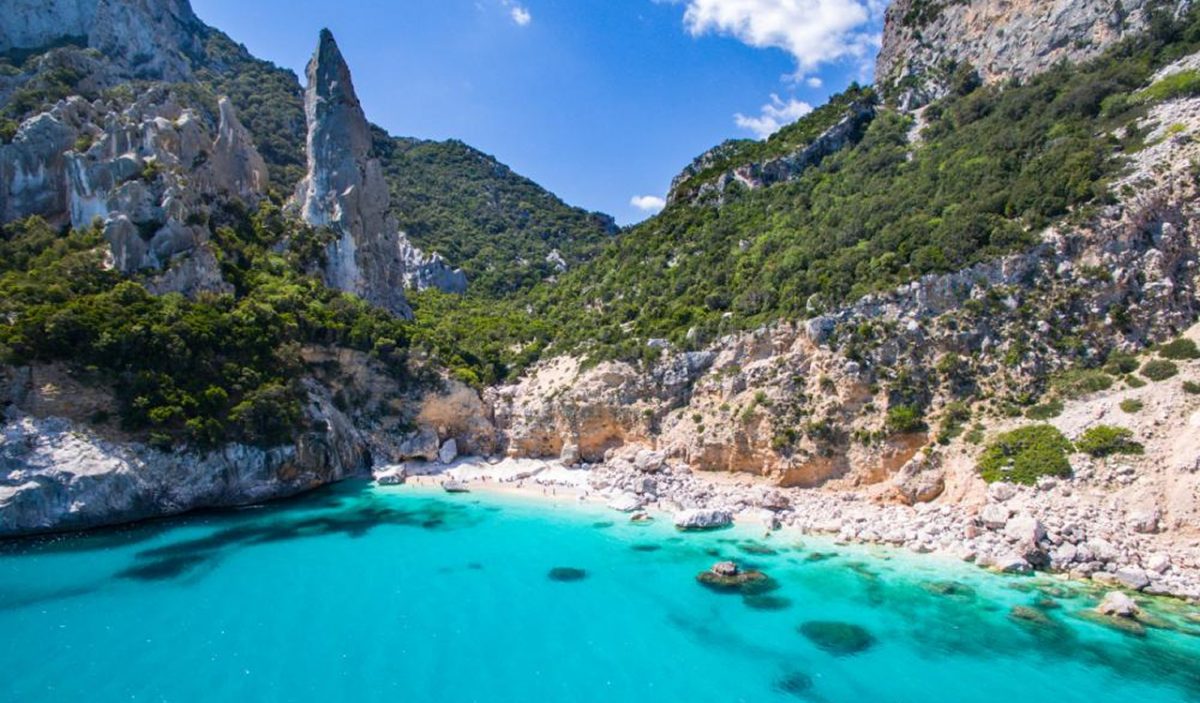
The beaches of the Gulf of Orosei are mostly accessible only by boat or via demanding trekking routes: Cala Luna, with its white beach framed by oleanders and caves opening in the cliffs; Cala Mariolu, with its white and pink pebbles and crystal-clear waters; and Cala Goloritzé, considered one of the most beautiful beaches in Italy, with its natural arch and the 143-metre-high limestone pinnacle. Numerous operators organise boat excursions that allow visitors to explore these wonders in a single day.
Afternoon: Tortolì and Arbatax
Continuing south along the SS 125 for another 40 kilometres, the landscape becomes rugged and wild, where the mountains descend steeply towards the sea. You then reach Tortolì, the main town of Ogliastra, and its seaside hamlet Arbatax, easily recognisable by the distinctive red porphyry rocks rising on the headland.
Arbatax offers a tourist harbour, equipped beaches and the opportunity to take excursions to some of the most remote beaches in the area. The Cea Beach, just a few kilometres north, is considered one of the most beautiful in Ogliastra, with its fine white sand and crystal-clear waters.
The surrounding area preserves important nuragic remains: the Nuraghe S’Ortali ’e Su Monti, a well-preserved complex dominating the plain of Tortolì, is well worth a visit to understand the strategic importance of this territory in ancient times.
Evening: Arrival in Bari Sardo and the Galanias Hotel & Retreat
From Tortolì, Bari Sardo can be reached in about 15 minutes, where the itinerary concludes at the Galanias Hotel & Retreat. After the kilometres travelled and the many emotions experienced, this property offers the ideal environment to relax and regenerate body and mind. Set within a private Mediterranean park, the hotel presents itself as an authentic retreat dedicated to holistic wellbeing. Its greatest strength lies in the yoga and wellness activities: daily yoga sessions in various styles (hatha, vinyasa, yin), guided meditation, mindfulness practices and themed workshops led by qualified instructors, all held in green outdoor spaces or on the sea-view terrace. The Galanias’ holistic approach allows guests to reconnect with themselves after several intense days of travel. The swimming pools – one main 25-metre pool and one for children – are surrounded by sun loungers and relaxation areas immersed in the park. The rooms, distributed among low-rise villas that respect the landscape, are spacious and bright, furnished with natural materials. The restaurant celebrates the cuisine of Ogliastra, a land of culinary traditions blending sea and mountain flavours: from culurgiones (ravioli filled with potatoes, pecorino cheese and mint) to very fresh fish dishes, from aged cheeses to desserts such as pardule. Torre di Barì beach, with its distinctive Aragonese tower, is just a few minutes’ walk away and is perfect for those seeking tranquillity and exceptionally clear waters.
As Salvatore Niffoi, winner of the Campiello Prize in 2006, wrote: “Sardinia is a land that gets inside you, that changes you.” These three itineraries are designed for travellers who wish to go beyond the postcard image of the island, for those who want to understand the millenary layering of cultures, landscapes and traditions that make Sardinia unique in the Mediterranean.
Travelling with Felix Hotels means not only moving between places of extraordinary beauty, but doing so with the awareness of being hosted in properties that interpret Sardinian hospitality in its most authentic sense: attention to detail, respect for the territory, enhancement of local products and, above all, that human warmth that makes every guest feel part of a large family.
Whether you choose the coast-to-coast journey from the western coast to Barbagia, the route through the granite landscapes and crystal-clear waters of Gallura, or the crossing from the far north to the eastern coast, each itinerary offers unique emotions and unforgettable memories. Sardinia, as Grazia Deledda loved to say, “is an ancient world that still knows how to speak to the heart”, and travelling through it slowly, dedicating time to every place and every encounter, is the best way to grasp its deepest essence.
Have a wonderful journey, and as they say in Sardinian: A si biri! – See you soon!